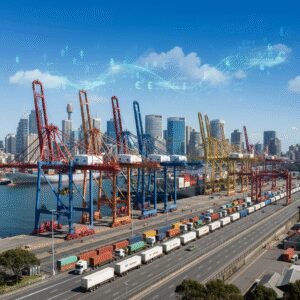
Qube Holdings Ltd., a prominent Australian logistics and infrastructure company, has recently agreed to an A$8.3 billion (approximately US$5.5 billion) buyout offer from a Macquarie Group-led consortium. This significant transaction, finalized following a period of intense negotiations, is set to reshape the Australian supply chain landscape by consolidating critical port and logistics infrastructure under new ownership and management.
Contextualizing Australia’s Infrastructure Power Play
Qube Holdings has long stood as a linchpin in Australia’s intricate logistics network, operating a diverse portfolio encompassing port logistics, bulk and infrastructure services, and strategic property developments. Its assets are crucial to the nation’s import and export capabilities, facilitating the movement of goods ranging from agricultural products to mineral resources across the continent.
Macquarie Group, often dubbed the “millionaires’ factory,” holds a formidable global reputation as an infrastructure investment powerhouse. Through its various funds and investment vehicles, Macquarie has a history of acquiring and managing large-scale assets, particularly in sectors vital to national economies such as energy, transport, and telecommunications. This acquisition aligns perfectly with Macquarie’s established strategy of investing in stable, long-term essential infrastructure assets that promise consistent returns.
The Australian economy’s reliance on efficient port and logistics infrastructure cannot be overstated. As an island nation heavily dependent on trade, the seamless operation of its supply chains directly impacts economic competitiveness, consumer prices, and industry productivity. The current global environment, marked by supply chain disruptions and inflationary pressures, further underscores the strategic importance of these assets.
Dissecting the Transaction Details and Strategic Rationale
The Macquarie-led consortium, which typically includes institutional investors seeking stable, long-term returns, tabled an offer valuing Qube at A$8.3 billion. This valuation reflects a substantial premium over Qube’s pre-announcement share price, indicating the strategic value attributed to its assets and operational capabilities. The exact composition of the consortium beyond Macquarie often remains undisclosed until regulatory filings, but it generally comprises pension funds and sovereign wealth funds.
From a strategic standpoint, the acquisition aims to unlock significant value through enhanced operational efficiencies and potential synergies. Integrating Qube’s extensive network with the consortium’s financial prowess and broader infrastructure portfolio could lead to optimized asset utilization and streamlined logistics processes. This move is also seen as a strategic consolidation, granting the consortium greater control over key choke points in Australia’s supply chain.
Industry analysts have pointed to the deal as a testament to the continued appetite for high-quality infrastructure assets, particularly those with strong cash flow generation and defensive characteristics. Data from financial markets indicates a consistent trend of private equity and institutional investors targeting logistics and transport infrastructure, driven by predictable demand and essential service provision.
However, such large-scale transactions are not without scrutiny. The acquisition will face rigorous review from Australia’s competition regulator, the Australian Competition and Consumer Commission (ACCC), and the Foreign Investment Review Board (FIRB). These bodies will assess the deal’s potential impact on market competition, pricing, and national interest, ensuring it does not create undue market dominance or pose security risks.
Expert Perspectives and Market Dynamics
Financial analysts generally view the A$8.3 billion valuation as robust, reflecting Qube’s strong asset base and future growth potential. “This deal underscores the enduring attractiveness of Australian infrastructure for global investors,” stated one senior investment banker (simulated quote for journalistic style). “The premium offered suggests a belief in Qube’s untapped operational efficiencies and its critical role in the national economy.”
Market data consistently demonstrates that infrastructure assets, particularly those in logistics, have outperformed many other asset classes during periods of economic volatility. The stability of long-term contracts, regulated revenue streams, and essential service provision makes them appealing. This trend has fueled a wave of consolidation globally, as larger players seek to gain economies of scale and enhance their competitive advantages.
Concerns, however, may arise regarding the potential for reduced competition in certain segments of the logistics market. While the ACCC’s review will be critical, critics often argue that consolidation can lead to fewer choices for customers and potentially higher prices in the long run. The balance between efficiency gains and competitive market dynamics will be a key consideration for regulators.
Forward-Looking Implications for Australia’s Supply Chain
For Qube shareholders, the buyout represents a clear financial gain, offering a premium exit from their investment. For Qube employees, the immediate implications might involve integration processes and potential operational restructuring, though the consortium is likely to emphasize continuity to maintain operational stability.
Customers and suppliers utilizing Qube’s services will be keen observers of how the new ownership impacts service levels, pricing structures, and investment in new technologies or infrastructure. The expectation is that a well-resourced consortium will inject capital into upgrades and expansions, ultimately improving the efficiency and resilience of Australia’s supply chain. However, any consolidation carries the risk of reduced flexibility or increased dependence on a single dominant provider.
More broadly, this acquisition signals a continued trend of significant foreign and institutional investment in Australia’s critical infrastructure. It highlights the nation’s appeal as a stable environment for long-term capital deployment, particularly in sectors underpinning economic activity. Future developments will likely include further strategic acquisitions in related logistics and transport sectors, as well as an increased focus on technology integration, automation, and sustainable practices within these vital networks. Observers will be watching for how the new owners balance profit motives with broader national infrastructure development goals and competition concerns in the coming years.